
Paulo Coelho
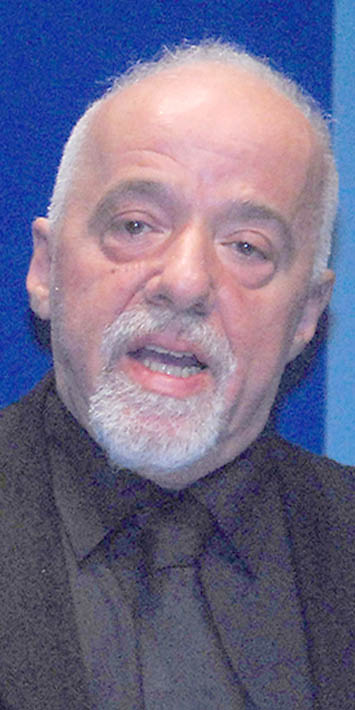
Paulo Coelho is one of the most widely read authors in the world. Although originally writing in Portuguese, his works are widely available in Spanish and are often used by learners due to their relatively accessible language and universal themes.
Why Paulo Coelho Matters for Spanish Learners
Unlike many traditional literary authors, Coelho’s writing is known for its simplicity and clarity. His books focus on personal growth, purpose, and spirituality, making them appealing to a broad audience.
- Simple and direct writing style
- Widely translated and globally recognized
- Focus on universal themes like purpose and destiny
- Popular entry point into literary Spanish
What Makes His Writing Unique
Coelho’s most famous work, El Alquimista, is written as an allegorical story. It follows a young shepherd named Santiago on a journey to find treasure, while exploring deeper themes of destiny and personal growth.
- Allegorical storytelling with clear messages
- Short, readable sentences compared to other authors
- Philosophical ideas presented in simple language
- Strong emphasis on following one’s purpose
Is Paulo Coelho Suitable for Spanish Learners?
Coelho is one of the few authors in this section whose work can be approached earlier than other literary writers.
- More accessible vocabulary and structure
- Clear narrative flow
- Less dense than traditional literary texts
- Suitable for upper-intermediate to advanced learners
When to Read Authors Like Paulo Coelho
At SpanishBlackbelt, literature is generally introduced at advanced levels. However, Coelho’s work can serve as a transition between practical Spanish and more complex literary texts.
Learners who are comfortable with everyday conversation may find his books a useful next step before moving on to more demanding authors.
How Literature Supports Spanish Development
Reading Coelho can help learners expand vocabulary and become more comfortable with longer texts while still maintaining clarity.
- Builds reading confidence
- Introduces abstract ideas in manageable language
- Improves reading fluency
- Bridges the gap to more complex literature
The Role of Conversation in Learning
Even with more accessible authors like Coelho, reading alone is not enough to develop full fluency. Understanding a story does not guarantee the ability to express ideas clearly.
Discussing what you read with a native Spanish-speaking tutor helps reinforce vocabulary and turn passive understanding into active communication.
A Balanced Approach to Learning
Paulo Coelho’s work offers an effective entry point into literary Spanish for learners who are ready to move beyond basic materials.
Combined with continued speaking and listening practice, his books can help learners build confidence and gradually progress toward more complex authors.
Recommended books
As an Amazon Associate we earn commisions from qualifying purchases made through links in this page.
A orillas del río Piedra me senté y lloré
by Paulo Coelho
A story centered on love and spiritual exploration, following two characters on a journey through the Pyrenees in search of deeper meaning.
The novel combines emotional narrative with philosophical themes, offering accessible yet reflective reading for learners.
El alquimista
by Paulo Coelho
A symbolic story about a young shepherd searching for treasure while learning to follow his dreams and interpret the signs of life.
Known for its simple and clear language, it is one of the most accessible literary works for learners transitioning into reading novels in Spanish.
Manual del guerrero de la luz
by Paulo Coelho
A collection of short reflective texts that combine storytelling with philosophical and motivational ideas.
Its brief passages and clear structure make it a useful resource for learners looking to build reading confidence while exploring deeper themes.
Biografía
Paulo Coelho nació en Rio de Janeiro, Brasil, en 1947. Hijo de un ingeniero y una ama de casa, Paulo tuvo una infancia difícil debido a su naturaleza rebelde. Las aspiraciones artísticas y la personalidad introvertida de Paulo preocupaba enormemente a sus padres, que terminaron por internarle en un centro psiquiátrico a los diecisiete años de edad. A su salida, tres años más tarde, Paulo aceptó el deseo de sus padres de estudiar derecho e ingresó en la universidad. Sin embargo, él sabía que quería ser escritor a pesar de las continuas negativas de sus padres, y al cabo de un año abandonó sus estudios de derecho. Durante un tiempo, viajó por América del Sur, África del Norte y Europa, y comenzó a componer música.
Tras varios saltos de una profesión a otra, decidió dedicar cada vez más tiempo a escribir. Su primera novela fue publicada a sus treinta y cinco años, “Los archivos del infierno”, y un año después, tras recorrer el Camino de Santiago en España, escribió “El peregrino de Compostela” en el que narra sus experiencias durante la peregrinación. Este viaje a España supuso una intensa experiencia para Paulo, y tras él, decidió dedicarse plenamente a la escritura.
En 1987, Paulo terminó “El Alquimista”, una novela alegórica sobre un pastor andaluz que viaja hasta el desierto de Egipto en busca de un tesoro escondido en las pirámides. Aunque obtuvo poca atención al principio, más tarde y tras varias traducciones a otros idiomas, se convirtió en un éxito mundial. Con 35 millones de copias vendidas, El Alquimista es el libro más traducido en el mundo por un autor en vida.
Desde la publicación de “El Alquimista”, un gran número de libros le siguieron. Entre estos destacan, “Brida”, “A orillas del rio Piedra me senté y lloré”, “Manual del guerrero de la luz”, “La quinta montaña”, “Veronika decide morir”, “El demonio y la señorita Prym”, y “La bruja de Portobello”.
Biography
Paulo Coelho was born in Rio de Janeiro, Brazil, in 1947. Son of an engineer and a housewife, he had a difficult youth due to his rebellious nature. Coelho’s parents responded to his artistic aspirations and to his introverted personality by committing him to a mental institution at the age of 17. Once released at the age of 20, Coelho accepted his parents’ wishes to study law, only to drop out one year later. He knew that he wanted to be a writer despite his parents’ discouragement. During some time, he travelled through South America, North Africa and Europe and started composing music.
After drifting among several professions he started to dedicate more time to writing. He published his first book at the age of 35, “The Archives of Hell”, and one year later, after walking along the Spanish catholic pilgrimage, “el camino de Santiago”, he published his autobiography “The Pilgrimage”. This trip to Spain changed the course of his life after which he decided to devote himself fully to writing.
In 1987, he finished “The Alchemist”, an allegorical novel about an Andalusian shepherd who travels to the Egyptian desert in search of a treasure hidden in the Pyramids. Although it got little attention at first, later on, and along with translations to other languages, it became a world success, selling over 35 million copies, becoming the most translated book in the world by any living author.
Since the publication of “The Alchemist”, numerous books have followed. These include “Brida”, “By the River Piedra I Sat Down and Wept”, “Manual of the Warrior of Light”, “The Fifth Mountain”, “Veronica decides to die”, “The Devil and Miss Prym” and “The Witch of Portobello”.
Estilo
El estilo lírico de Paulo Coelho es considerado por muchos como un lenguaje universal. Su simplicidad y forma poética permite a los lectores observar de manera sencilla el desarrollo de los personajes y experimentar la acción de la historia junto a ellos. Coelho no sólo es único por la originalidad de sus historias, sino también por su estilo directo y sencillo.
Paulo Coelho es hoy uno de los escritores más leídos del mundo con más de 150 millones de libros vendidos en más de 150 países y traducidos a 80 lenguas. Un autor que uno no se puede perder.
Style
Coelho’s lyrical style of writing is considered by many to be a universal language. His simplicity and poetic flow allow readers to easily watch the development of characters and experience the action of the story alongside them. Coelho is not only unique in his stories’ subject matter, but also in his straightforward delivery.
Today, Paulo Coelho is one of the most read writers worldwide with over 150 million books sold in more than 150 countries and translated into 80 different languages. An author that one cannot miss out.

