
Isabel Allende — Literature for Spanish Learners
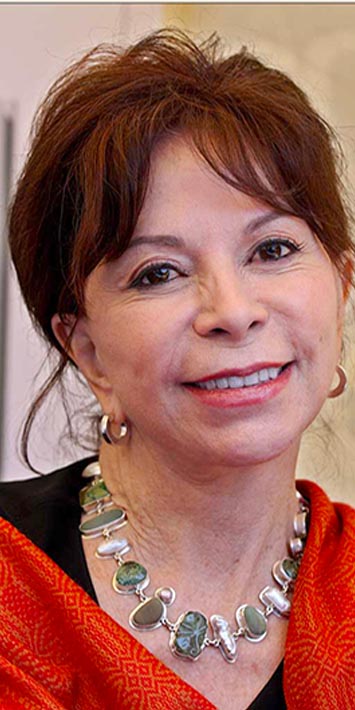
Biografía
Isabel Allende nació en 1942 en Lima (Perú), hija de padres chilenos. Debido a la carrera diplomática de su padre, vivió en distintos países durante su infancia y juventud, experiencia que influyó profundamente en su visión del mundo y en su narrativa literaria.
Trabajó como periodista en Chile hasta 1973, cuando tras el golpe de Estado tuvo que exiliarse en Venezuela. Allí comenzó la obra que la lanzaría a la fama internacional: La casa de los espíritus (1982), novela que inició como una carta a su abuelo enfermo y que se convirtió en uno de los mayores referentes de la literatura latinoamericana contemporánea.
Entre sus obras más conocidas se encuentran De amor y de sombra, Eva Luna, Paula, Hija de la fortuna, Retrato en sepia y La ciudad de las bestias.
Biography
Isabel Allende was born in 1942 in Lima, Peru, to Chilean parents. Because of her father’s diplomatic career, she lived in several countries during her childhood, an experience that later shaped her literary voice and global perspective.
She worked as a journalist in Chile until 1973, when political upheaval forced her into exile in Venezuela. There she began writing The House of the Spirits (1982), originally conceived as a letter to her ill grandfather. The novel became an international success and established her as one of the most prominent voices in contemporary Latin American literature.
Other major works include Of Love and Shadows, Eva Luna, Paula, Daughter of Fortune, Portrait in Sepia, and City of the Beasts.
Estilo literario
La obra de Isabel Allende suele asociarse con el realismo mágico, corriente literaria que integra elementos fantásticos dentro de contextos históricos y cotidianos. Sus novelas combinan memoria, historia, política y mitología, creando narrativas ricas en imágenes y simbolismo.
Además del realismo mágico, ha escrito novelas históricas y textos autobiográficos que exploran la identidad, la familia y la memoria colectiva.
Literary Style
Allende’s writing is often associated with magic realism, a literary style that blends fantastical elements with historical and everyday realities. Her novels weave together memory, politics, myth, and personal identity, creating layered narratives rich in imagery and symbolism.
Beyond magic realism, she has written historical novels and autobiographical works that explore themes of identity, family, displacement, and cultural heritage.
¿Por qué leer a Isabel Allende para aprender español?
- Exposición a vocabulario descriptivo y literario avanzado.
- Diálogos naturales que reflejan registros formales e informales.
- Contexto cultural latinoamericano auténtico.
- Variedad de tiempos verbales y estructuras narrativas complejas.
Sus novelas son especialmente recomendables para estudiantes de nivel intermedio alto y avanzado que desean ampliar su comprensión lectora y su sensibilidad cultural.
Why Read Isabel Allende to Learn Spanish?
- Exposure to advanced descriptive and literary vocabulary.
- Natural dialogue reflecting formal and informal registers.
- Authentic Latin American cultural context.
- Complex narrative structures and varied verb tenses.
Her novels are particularly valuable for upper-intermediate and advanced students seeking to strengthen reading comprehension and deepen cultural understanding.
Recommended books
As an Amazon Associate we earn commisions from qualifying purchases made through links in this page.
Retrato en Sepia : Una Novela A finales del siglo XIX en Chile, Aurora del Valle sufre de un trauma brutal que borra de su mente los primeros cinco años de su vida. Criada por su ambiciosa abuela, Paulina del Valle, crece en un ambiente privilegiado, pero se ve atormentada por horribles pesadillas. Cuando debe afrontar la traición del hombre que ama, y la soledad, decide explorar el misterio de su pasado. Portrait in Sepia is a 2000 novel by Isabel Allende. It is the second part in the stories of the Sommers family. Continuing with the granddaughter of Eliza Sommers (Hija de la fortuna), the protagonist is Aurora del Valle. The bastardized daughter of Lynn Sommers (the daughter of Eliza and Tao Chi'en) and Matias Rodriguez de Santa Cruz(son of Paulina del Valle and Feliciano Rodriguez de Santa Cruz) has no memory of her first 5 years of life. She has reaccuring nightmares of men in black pajamas looming around her, and losing the grip on the hand of someone beloved. |
Mi Pais Inventado : Un Paseo Nostalgico por Chile El primer recuerdo que Isabel Allende tiene de Chile es el de una casa que nunca conoció: la "casa grande y vieja" de la calle Cueto, donde nació su madre. Esta casa, evocada por su abuelo con tanta frecuencia que Isabel cree haber vivido allí, se convierte en la protagonista de su primera novela La Casa de los Espíritus. Dicha obra vuelve a aparecer al comienzo de las fascinantes y seductoras memorias, Mi País Inventado, que ahora nos ofrece esta talentosa escritora. Isabel Allende, author of numerous bestselling novels, was born in Peru, grew up in Chile, and then traveled with her parents to various diplomatic posts. Later, she was exiled permanently from Chile after the military coup of 1973. She is a perpetual foreigner now, an outsider in every culture, and so she sees things others miss. In this book, Author Allende takes a nostalgic look back at her life, her family, her native land, its culture, its foibles and its great strengths. She also reveals a great deal of her own inner self, creaing a powerful bond of intimacy with her readers. |
|
El plan infinito El Plan Infinito, de la celebrada escritora latinoamericana Isabel Allende, es su primera novela situada en los Estados Unidos y con personajes nortemamericanos. Es la hipnozitizante y conmovedora saga de un hombre que, durante los largos años de su juventud y madurez, busca amor y aceptación. Allende traza la pobreza y abandono de la niñez de su protagonista, la persecusion de las pandillas de un barrio de Los Angeles,el horror de sus experiencias en Vietnam, su vida frenética como abagodo en San Francisco---una serie de frustraciones que por fin se resuelven en acogida y redención. What makes Allende's writing so remarkable in El Plan Infinito is that every one of the characters--and at times there are almost too many--struggles toward the light, toward redemption, in his or her own way. And so, although these characters have terrible flaws and failings, you come to love them and wish them well. And by the end of the book, most of them--well, I won't spoil it for you. Author Isabel Allende has a unique way of creating a sense of intimate communion with her readers, so that you feel you have come to know her as well. |

